Hong Kong needs to ask the hard questions about its net-zero challenge
Net-zero commitments are now commonplace across Hong Kong’s property sector. Many major developers have announced targets for 2030 and 2050, often framed around energy efficiency, renewable energy and greener buildings.
This is welcome. However, as climate ambition becomes the norm, a more uncomfortable question comes into focus: how many of these commitments are grounded in a serious understanding of what decarbonisation actually entails?
What remains largely missing from Hong Kong’s climate conversation is analytical depth. Targets are plentiful; pathways are not. We talk often about goals, technologies and timelines, but far less about trade-offs, constraints and the hard arithmetic of emissions reduction.
In this respect, a recent report by Hang Lung Properties, “Our Journey to Net Zero”, stands out. This is not because it has all the answers, but rather because it is willing to ask the difficult questions.
What makes the report notable is its honesty. Rather than presenting net zero as a smooth or inevitable journey, it applies a bottom-up decarbonisation model to examine how emissions evolve under different scenarios, assumptions and growth trajectories through to 2050. It tests possibilities rather than promising outcomes. In doing so, it surfaces uncomfortable truths that the property sector should not ignore.
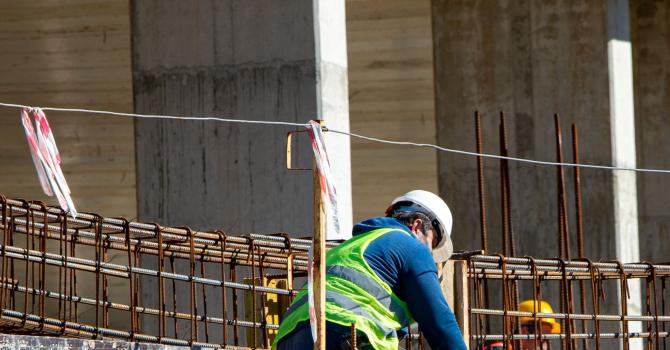
First, new construction is the single most consequential variable shaping longterm emissions outcomes. Operational improvements and renewable energy procurement deliver meaningful reductions, particularly in the near term. But over time, embodied carbon from steel, concrete and aluminium dominates the picture. Even modest growth can overwhelm efficiency gains unless construction materials themselves decarbonise rapidly.
The report quantifies this starkly for Hang Lung. With just 1 per cent annual floor area growth after 2030, new construction would raise 2050 emissions by 38 to 46 per cent compared with a no-growth baseline. This makes clear that growth, materials and emissions are inseparable.
Under some scenarios, new construction could raise 2050 emissions by around 40 per cent compared with a no-growth baseline.
Second, the report shows that as the largest sources of emissions decline, smaller and often overlooked categories become increasingly important. Purchased services, waste, transport and other such emissions – some of the sources of what are known as Scope 3 emissions – can make up the bulk of residual emissions by mid-century.
Net zero, it turns out, is not just about flagship technologies or landmark projects; it is also about the unglamorous work of procurement, services, logistics and data quality. Ignoring these categories might make pathways look smoother on paper, but it undermines credibility in practice.
Third, by laying out alternative pathways side by side, the report implicitly highlights the cost and financing dimension of climate action. Different decarbonisation routes imply a wide range of capital needs, risk profiles and timelines.
Construction-heavy pathways lock in large amounts of capital to carbonintensive materials unless low-carbon steel, concrete and aluminium scale rapidly. Other pathways rely more heavily on operational upgrades, renewable energy procurement and system efficiency. These differences should matter to banks, investors and insurers seeking to price transition risk and allocate capital prudently.
The modelling also has an important implication for how the sector thinks about existing buildings. Emissions fall most sharply in scenarios where new construction slows, highlighting the climate and capital efficiency of retrofitting existing assets.
Investments in retro-commissioning, energy efficiency upgrades and adaptive reuse avoid large embodied-carbon costs while delivering faster, lower-risk emissions reductions. This insight is particularly relevant in mature cities such as Hong Kong, where the bulk of the 2050 building stock already exists and where capital efficiency matters as much as ambition.
Equally striking is what is not glossed over in the report. It acknowledges limitations in data, uncertainties around grid decarbonisation and blind spots such as refrigerants and tenant fit-outs – areas that could significantly affect long-term emissions but are often undercounted or ignored. By making these gaps explicit, the report invites scrutiny and improvement rather than complacency. It treats decarbonisation not as a branding exercise, but as a learning process.
This kind of transparency is rare. Such scenario-based analyses allow us to understand the scale of the challenge. Without shared analytical reference points, it is difficult for policymakers, financiers and the public to distinguish between genuine progress and well-intentioned aspiration.
The significance of this approach is particularly relevant to the Hong Kong government as it prepares its next Climate Action Plan 2050. The targets are there, but how to get there is less clear. Having deep, sector-specific modelling that compares different decarbonisation pathways and makes trade-offs explicit would be essential.
Emissions trajectories are shaped not just by technology, but by land use decisions, infrastructure choices, market structures and patterns of growth. Government-led, sectoral decarbonisation modelling would not dictate outcomes, nor should it.
However, it could clarify what is feasible, what is costly, what is uncertain and where policy intervention delivers the greatest impact. It would provide a shared analytical foundation for engagement with business, finance and civil society. And it would allow informed debate and choices.
We can all benefit from clarity. The kind of clear-eyed, scenario-based thinking demonstrated in this report offers a glimpse of what that might look like. Net-zero targets tell us where we want to go. Deep decarbonisation modelling tells us how to get there and at what cost.
Contributed by Prof. Christine Loh. The article was published on SCMP: